Custom Search
Showing posts with label Transport. Show all posts

The most beautiful four-door car in the world - Rapide Fire

Bookmark and Share
See more HOT pictures

Maker Aston Martin calls the Rapid the most beautiful four-door car in the world.'The Rapide is a sports car', says Ulrich Bez, the chief executive of Aston Martin. Normally, he wouldn't feel the need for such emphasis: expensive, hand-crafted British sports cars are Aston's business. But the £140,000 Rapide is something new, the company's first four-door, four-seater car since the Lagonda of the 1970s. Bez doesn't want this car to be misunderstood. It is not a rival for the Bentley Continental Flying Spur or the uber-sedans from Mercedes, BMW and Audi and it differs fundamentally from its most obvious counterpart, the Porsche Panamera.


See more HOT pictures

As Aston sees it, the Porsche was designed as a low-line car providing generous space for four adults and the body was shaped accordingly, hence its hump-backed look; the Rapide is an Aston Martin DB9 with more room for people and luggage but no compromise to its gorgeous, flowing style. Bez describes the Rapide as "the most beautiful four-door car in the world" and adds: "The proportions had to be perfect. If we couldn't have achieved this, we wouldn't have made it." So this is not a car for the part-time driver who likes to conduct business from the back seat. Neither is it suitable for making the grand entrance at a film premiere or society ball for a skirted lady (or a Scotsman) in context of modesty while emerging from the back.

Air India plane plunges down cliff at Mangalore

Bookmark and Share
See more HOT pictures

Young girl pulled from debris alive after flight overshoots hilltop runway

Women On Wheels - These are the luckiest cars we've ever seen

Bookmark and Share
See more HOT pictures

The New England Patriots may have lost Super Bowl XLII, but these photos of their cheerleaders make everyone a winner.

Rinspeed Splash: Sports Car & Speed Boat

Bookmark and Share
The Rinspeed Splash is a concept amphibian vehicle with hydrofoil design capable of 45 knots on water or nearly 200 km/h on land. Propelled by a 750 cc two cylinder turbo-charged engine burning natural gas which supplies 140hp at 7000rpm and weighing just 825kg, this strange looking vehicle can accelerate from 0 to 100km/h in just 5.9 seconds. It premiered at the 2004 Geneva Motor Show, but is not planned for production.The Splash was featured in an episode of Top Gear. It set a record in crossing the English Channel.
Rinspeed is a Swiss automobile manufacturer and tuning designer. Rinspeed specialise in restoring classic cars, and tuning and modifying modern cars (like Porsches and Subarus). They also design exotic concept vehicles for the Geneva Motor Show each year.
Rinspeed was founded in 1979 by Frank Rinderknecht.

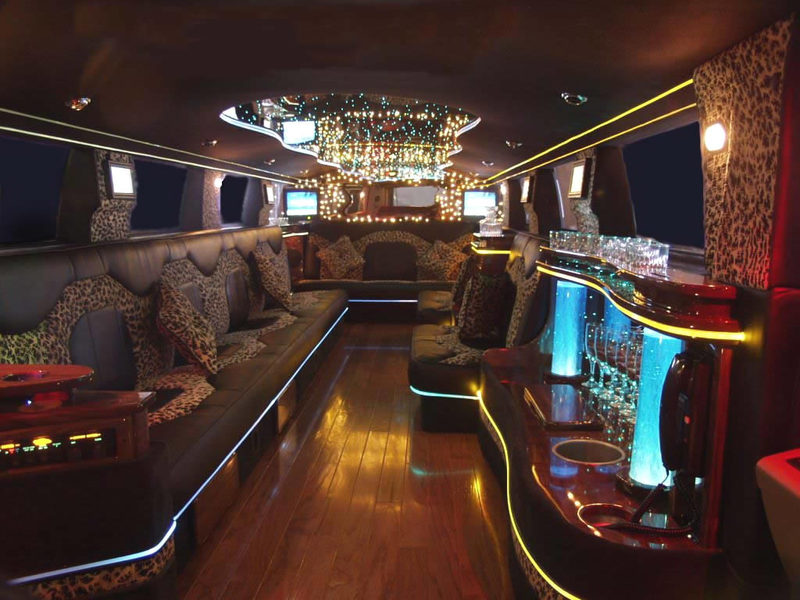
The Best Limousines in the World

Bookmark and Share
See more HOT pictures

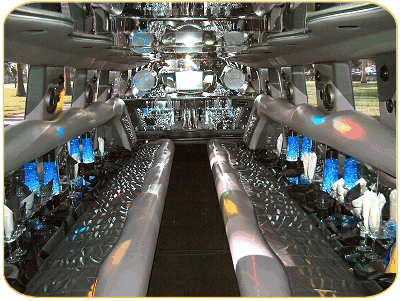
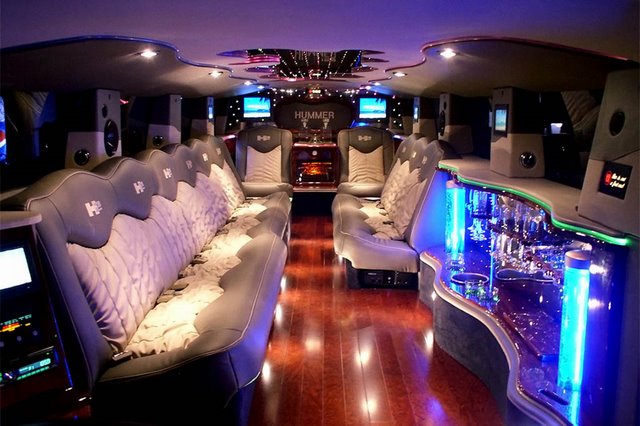
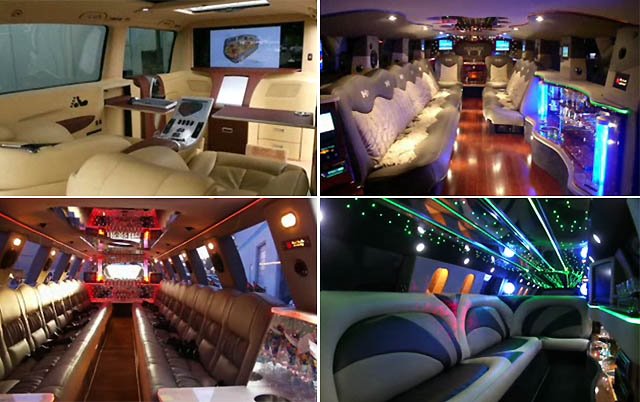
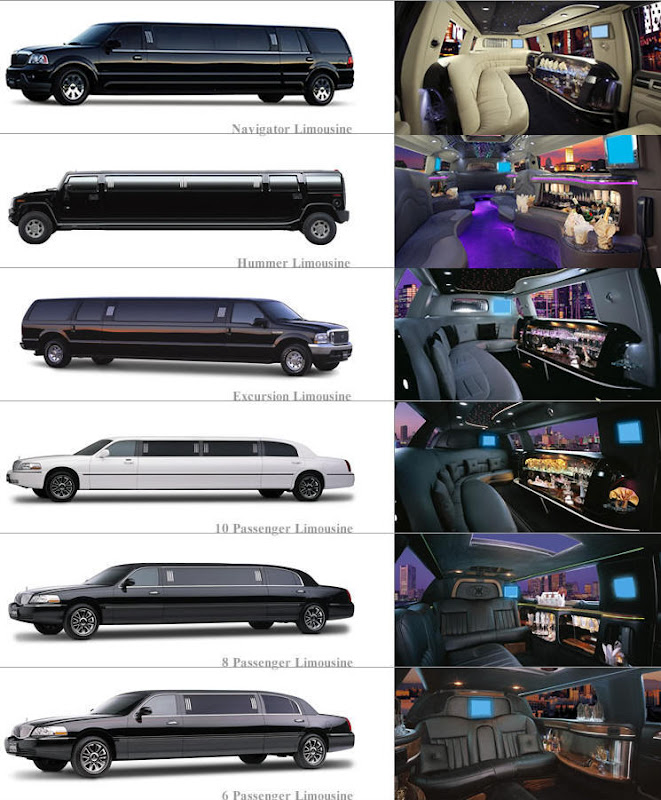
A limousine (or limo) is a luxury vehicle sedan or saloon car, especially one with a lengthened wheelbase or driven by a chauffeur. The chassis of a limousine may have been extended by the manufacturer or by an independent coach builder. These are referred to as "stretch" limousines and are traditionally black or white in color. Limousines are often driven by chauffeurs and until the mid-1990s were most often associated with the very rich. They are also used for special occasions such as weddings, parties and sight-seeing tours.


See more HOT pictures

While some limousines are owned by individuals, many are owned by governments to transport senior politicians, by large companies to transport executives, or by broadcasters to transport guests.


See more HOT pictures


See more HOT pictures

Most stretch limousines, however, operate as livery vehicles, providing upmarket competition to taxicabs. Most builders of stretch limousines are located in the United States and Europe and cater mainly to limousine companies. Few stretch limousines are sold new to private individuals. In addition to luxuries, security features such as armoring and bulletproof glass are available.


See more HOT pictures

The first automobile limousine, built in 1902, was designed so the driver sat outside under a covered compartment.


See more HOT pictures

The word limousine is derived from the name of the French region Limousin, because this covered compartment physically resembled the cloak hood worn by the shepherds there. An alternate etymology has the chauffeur wearing a Limousin-style cloak in the open driver's compartment, for protection from the weather.


See more HOT pictures

The first “stretch limousine” was created in Fort Smith, Arkansas around 1928 by a coach company named Armbruster. These cars were primarily used to transport famous “big band” leaders, such as Glenn Miller and Benny Goodman, and their bands and equipment. These early stretch limousines were often called “big band buses”.


See more HOT pictures


See more HOT pictures

Newer limousines such as the Maybach 62, Rolls Royce Phantom, Audi A8L, Volkswagen Phaeton, Mercedes-Benz S-Class, Jaguar XJ, BMW 760Li, Rover 75, Lincoln Town Car Edition, and the Cadillac DTS do not feature such seats since stretch limousines are usually used to transport more than three passengers, excluding the driver.


See more HOT pictures

In production American limousines however, the jump seats almost always faced forward. The last production limousine, by Cadillac, with forward facing jump seats was in 1987 (with their Fleetwood Series 75 car), the last Packard in 1954, and the last Lincoln in 1939, though Lincoln has offered limousines through their dealers as special order vehicles at times. Several Lincoln Premier cars were also built, one being owned by Elvis Presley. Vehicles of this type in private use may contain expensive audio players, televisions, video players, and bars, often with refrigerators.


See more HOT pictures


See more HOT pictures


See more HOT pictures


See more HOT pictures


See more HOT pictures


See more HOT pictures


See more HOT pictures


Phileas BRT - Future Tech Bus

Bookmark and Share
The Phileas BRT (Bus Rapid Transport) vehicle, developed by the Dutch company Advanced Public Transport Systems (APTS) can drive itself automatically on a dedicated track as well as being manually driven on normal roads. The Phileas system is already in use since 2004. A hybrid-electric drive makes the vehicle up to 30 per cent more fuel efficient than other buses of comparable size.In semi-automatic mode the driver accelerates and brakes manually, while the vehicle steers itself.

In automatic mode all three functions are performed by the vehicle with speeds up to 70 kilometres per hour (44 mph). An electronic guidance system is following the magnetic markers mounted every 4 to 5 metres in the road surface for reference. If deviations of more than half a metre (1.6 ft) occur, either in automatic or semi-automatic mode, the vehicle is automatically stopped.

The BMW Vision EfficientDynamics

Bookmark and Share
The BMW Concept Vision Efficient Dynamics is the concept vehicle of BMWs first of fuel efficiency and emission management vehicle and was revealed at the Internationale Automobil-Ausstellung Frankfurt in September 2009.
The Vision Efficient Dynamics is a plug-in hybrid with a three cylinder turbodiesel engine. Additionally, there two electric motors with 139 horsepower. It allows an acceleration to 100 km/h in 4.8 seconds.
Manufacturer BMW
Class Sports car
Body style(s) Coupé
Length 4600 mm
Width 1900 mm
Height 1240 mm
Curb weight 1395 kg
Innovative concept car gets M3 power with record-breaking supercar economy and emissions figures BMW at the Frankfurt Motor Show


The BMW Vision EfficientDynamics is BMW’s most innovative concept car ever and sets a new performance car agenda. Its unique powertrain, ground-breaking performance potential and exo-skeletal style bodywork crafted from aerodynamic knowledge gained in Formula One set it apart from anything previously seen.

Powered by a three-cylinder turbo diesel engine and two electric motors, the BMW Vision EfficientDynamics is capable of BMW M3 performance but with a fraction of that model’s CO2 emissions and far greater fuel economy. The striking concept car is showcased with a powertrain producing an anticipated 356hp and 800Nm of torque for true supercar performance. However, the vehicle has been designed to be capable of recording 75.1mpg on the combined cycle and CO2 emissions of 99g/km.

The vehicle’s impressive performance figures improve further when it runs solely in hybrid mode. When taking the sources of electrical energy generation into account the CO2 emissions of the BMW Vision EfficientDynamics drop to a staggering 51g/km*.

The BMW Vision EfficientDynamics highlights a number of technologies that will appear on BMWs of the near future. BMW’s Air Curtain system that channels air through a front valance with the air exiting ahead of the front wheel is fitted. The Air Curtain system’s exiting air flow effectively deflects air from entering the wheel arch and causing turbulence thus improving all round performance.

The bodywork of the BMW Vision EfficientDynamics also takes styling cues from the marque’s involvement in Formula 1. The exo-skeletal appearance of elements of the design mean the vehicle cleaves through the air with the least possible resistance. The drag co-efficient is 0.22 – the lowest figure of any BMW road car. The subtle folds of the bodywork that sit proud of the passenger cocoon create downforce without the need to have large spoilers.

The 1.5-litre three-cylinder turbocharged diesel engine is another feature that indicates production potential. In isolation this new engine is capable of recording peak power of 163hp, a new record in terms of output per litre at 109hp, and a peak torque of 290Nm. Mounted transversely and ahead of the rear axle, the diesel engine can be the sole power source for the vehicle or it can work in conjunction with the electric drive. Alternatively the diesel engine can be used to charge the electric drive battery pack.

The hybrid drivetrain features two electric motors – one on each axle. At lower speeds just the electric drive mode functions. The rear axle motor can produce up to 38kW of power and 290Nm of torque, while the second axle motor is capable of 60kW and 220Nm of torque. However, an overboost function allows the driver to top this up to 84kW for a 30 second boost and 104kW for a 10 second power enhancer. When taking all three power sources into account these figures equate to a car that records a peak power of 356hp and torque of 800Nm. Power is transmitted to the road via an enhanced version of BMW’s existing seven-speed Double Clutch Transmission.

The BMW Vision EfficientDynamics has a range of 31 miles when driving only on electric mode. Combined with the three-cylinder diesel engine this extends to a total possible distance between fill-ups and charges of 431 miles. Using a conventional domestic power source at 220 V would result in the vehicle being fully recharged after 2.5 hours. Access to a slightly more powerful 380 V sees the charge time drop to 44 minutes.

Unlike other hybrid vehicles that use existing vehicle architecture and then add a hybrid drivetrain, the BMW Vision EfficientDynamics isn’t penalised by weight. A V8 or larger capacity engine that would be the norm for a supercar has been substituted by a compact three-cylinder engine and two electric motors. This is fitted to an aluminium chassis to further save weight. The result of this is that the vehicle tips the scales at just 1,395kgs.

The use of low rolling resistance tyres has also taken on another twist to offer something unique. Normally customer demand for larger alloy wheels with wider tyres is at odds with aerodynamic and rolling resistance targets. However, BMW engineers working with Michelin developed a solution to this conundrum. The contact patch of the BMW Vision EfficientDynamics has effectively been turned 90 degrees by virtue of specifying larger diameter wheel rims. Larger, but thinner tyres result in the same percentage of rubber being in contact with the road, but the cross section of the tyre as a whole is smaller making for less rolling resistance and greater aerodynamic efficiency.

BMW is renowned for using lightweight materials as part of its EfficientDynamics strategy and this concept car is no different. The chassis and suspension are made entirely from aluminium while the roof and the outer skin of the doors are made of a lightweight polycarbonate glass. This material also comes with special properties that allow the glass to darken in sunlight to keep the cabin temperature at the desired level.

The BMW Vision EfficientDynamics also showcases BMW’s Thermo Electric Generator currently fitted to the exhaust system of test cars and being developed for production. This works on the principle of the Seebeck effect to generate an electrical current courtesy of the temperature change between two metal based semi-conductors. This system alone generates enough charge to power some of the auxiliary features.

Inside, and the 3D Head-up Display is another feature that highlights at possible production car capability as does a new incarnation of iDrive with a touchpad screen. The vehicle’s 4.6 metre length, 1.9 metre width and 1.24 metre height permit a 2+2 configuration that makes this supercar a practical form of transport. With the rear seats folded the BMW Vision EfficientDynamics even has room for two sets of golf clubs that can be stowed in the 150-litre luggage area.

The Donkey And The Merc, Shrek's Donkey Spotted in Pakistan

Bookmark and Share
The Mule beats the Mercedes in loading and unloading self leveling system. See the car that goes by in the back. It must be Shrek's Donkey.

The Panther Bike: volume of 1200 cu cm

Bookmark and Share
See more HOT pictures

See more HOT pictures

See more HOT pictures

See more HOT pictures

See more HOT pictures

The bicycle, cycle, or bike is a pedal-driven, human-powered vehicle with two wheels attached to a frame, one behind the other.

Bicycles were introduced in the 19th century and now number about one billion worldwide. They are the principal means of transportation in many regions. They also provide a popular form of recreation, and have been adapted for such uses as children's toys, adult fitness, military and police applications, courier services, and competitive sports.

The basic shape and configuration of a typical bicycle has changed little since the first chain-driven model was developed around 1885. Many details have been improved, especially since the advent of modern materials and computer-aided design. These have allowed for a proliferation of specialized designs for particular types of cycling.

The bicycle has had a considerable effect on human society, in both the cultural and industrial realms. In its early years, bicycle construction drew on pre-existing technologies; more recently, bicycle technology has, in turn, contributed both to old and new areas.
Related Posts with Thumbnails